
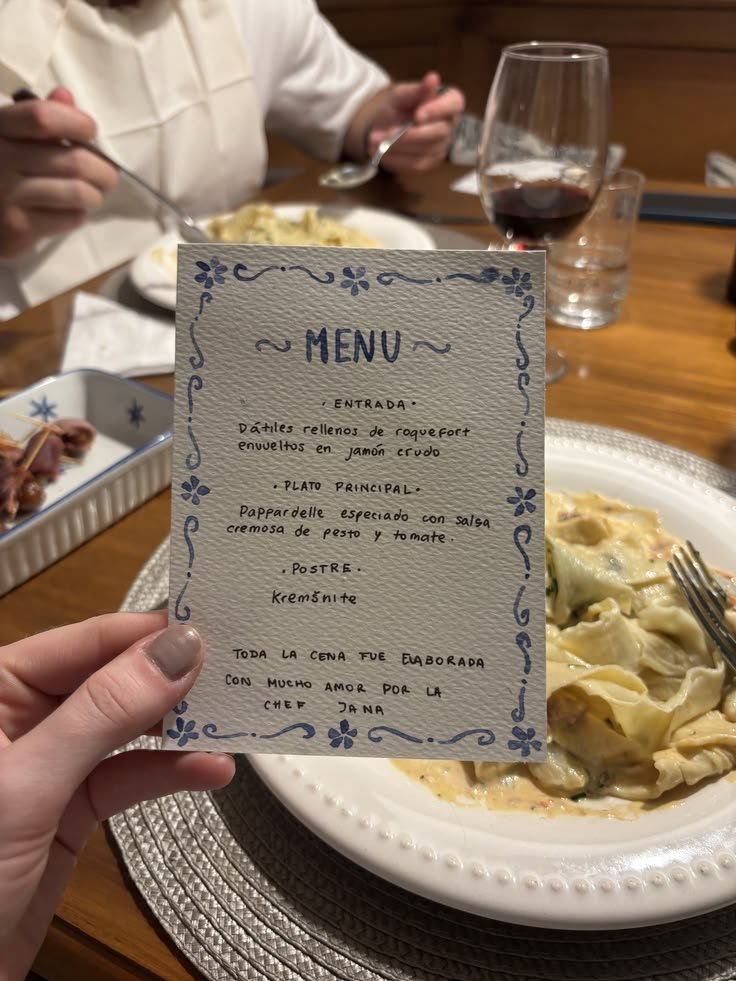
Most hosting advice starts before guests arrive. This one starts after the pasta is down: a card, written in ink, listing what you cooked. Nobody needs it to order. They need it so the evening has a beginning, a middle, and a dessert with a name.
Paper After the Pour
A printed menu on an empty charger is a wedding. A handwritten one passed across a table already in use is a dinner with friends. The wine is poured. Someone is mid-bite. The card still belongs — it is the only object on the table that says the cook thought about the sequence, not only the pan.
Keep it small enough to hold. A blue border or a few drawn flowers is decoration enough. If you cannot draw, a straight line in the same ink will do. The handwriting is the point. Typed type on a home printer looks like homework.
Guests will forget the recipe. They will remember that it had a title.
The Rest of the Table Can Stay Everyday
A woven charger, a white plate, a water glass next to the wine. Nothing here is matching. The menu is the one decided object, which is why it photographs — and why it works on a Tuesday if you want it to.
Write three lines: something to start, something to eat, something sweet. Sign it if you like. Then put the card down and sit. The hosting is finished.
A Short List
- One card per seat, or one to pass — either is a gesture.
- Ink, not a printout. Names of dishes, not a paragraph.
- Let plates and glasses stay what you already own.
Set the table with a Place Setting and Wine Glasses, then add the paper. That is the gift.